
Crosvia CRM · A Crosvia Solutions product
Know who needs attention—and why.
Crosvia CRM is the customer operating system for lead-driven teams. It connects every conversation, explains what matters now and prepares the next move—while your people stay in control.
Live product interface
One queue. Complete context.
The interface shown is from the live product.
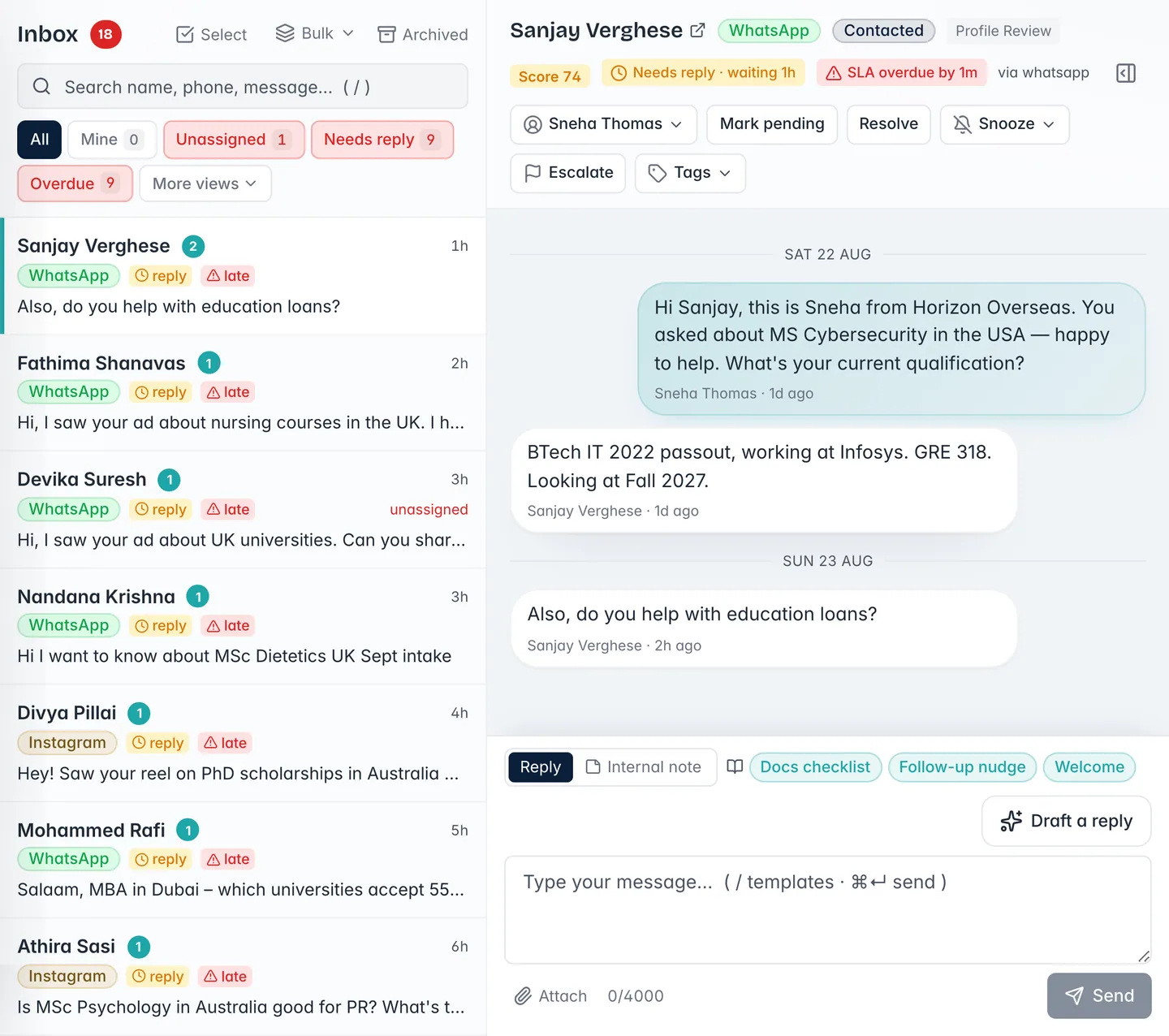
- 01Know who is waiting
Every lead is ordered by urgency with the reasons visible.
- 02Open the full history
Messages, calls, source and pipeline movement stay with one person.
- 03Own the next move
Reply, assign or advance the lead without losing accountability.
- One timeline
- WhatsApp, Meta, email, forms and calls
- Explainable priority
- Every score keeps its reasons visible
- Human control
- The system drafts; your team reviews and sends
- Hosted in India
- Bengaluru production region
How the product works
From incoming lead to accountable action.
The CRM does more than record activity. It creates a shared operating rhythm for the team.
- 01
Bring the full context together.
Incoming activity resolves to one lead instead of producing a separate record in every channel.
- 02
See what deserves attention.
Priority, reasons, ownership and the next action stay visible together—not hidden behind an unexplained score.
- 03
Move with a clear owner.
Crosvia prepares the work. Your team reviews, sends and remains responsible for the outcome.
Product status
Built for live operations.
Crosvia CRM is in active use for lead operations. The product evidence shown here reflects the current interface and available capabilities.
Implementation questions
What teams ask before rollout.
What does the AI do?+
It matches activity to a lead, orders the priority queue with visible reasons and drafts replies. Your team reviews and sends.
Does it replace WhatsApp?+
No. Crosvia uses the official WhatsApp Cloud API and places each conversation inside the lead record with calls, forms, email and pipeline history.
Can we bring our spreadsheet?+
Yes. Setup can import an existing lead sheet, map owners and stages, and configure the first working pipeline.
Bring one real pipeline and the places where follow-up currently breaks.